Showing posts with label Publishing. Show all posts

Tuesday, October 7, 2025

WORLDS GONE TO ETHER


A dear friend told me more than ten years ago that her physical bookshelves were emptying. For reasons of space saving, she had gone from squeezing in more volumes to replacing them with eBooks. She’s an avid reader, for whom books are not an occasional pastime or a distraction. Books are her passion.


 Mind you, she’s also a librarian.


The day a librarian is giving up her stacks of physical paper books is also the day our reality has moved to the ethernet.


That day is almost here.


Has your bank been imploring you to forgo paper statements? Have your utility companies stopped sending paper bills and even offered discounted bills if you go to “autopay?” Has your doctor been sending medical test orders to the lab virtually, no paper orders anywhere? Have your plane/train/bus tickets gone to an app on your phone with no paper backup needed?


You know what I’m saying.

It saves some trees. Hooray. It also saves space. It moves records of reality from our physical spaces to another realm, one that is microscopic by comparison.


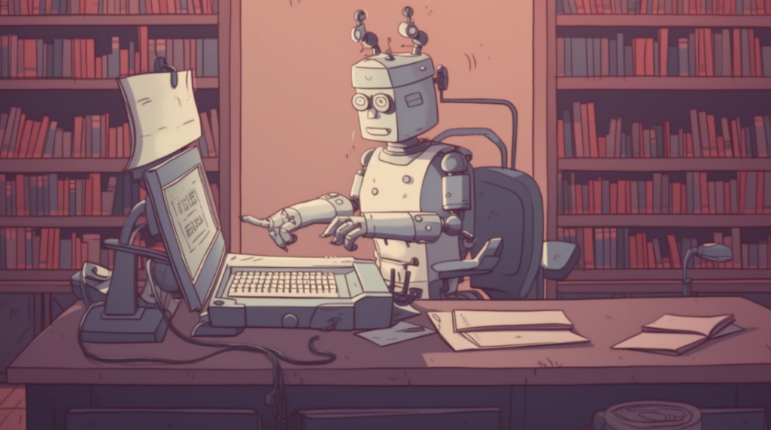
This post from some months ago got me thinking about my post today. Even traditional publishers have realized the precious space of weatherized warehouses need not be, because POD books (Print On Demand) have become indistinguishable in quality and will do for those who like to hold a physical paper book. They print a physical book only after it’s ordered and paid for/sold.


Despite the title of this post, it is not about the afterlife. It is about the digital world replacing the physical in many spheres. This leaves more room for us, wretched creatures, while we’re still inhabiting the physical.


Tuesday, June 10, 2025

When Seeking Agent Representation* for Picture Book Writers


*Disclosure: I never sought representation for my picture book texts because very few agents are open to such. Both my previous agents did represent my picture books but took me as a client for my Middle Grade novels.


The conventional wisdom on agent-seeking is that if you approach such for picture books, it is better to have at least three manuscripts polished and ready to go.


Why?


In one way, this is counter intuitive. Every manuscript is its own animal, and a great highly marketable one is just that. Writers who seek agent representation with longer works are not expected to have more than that one ready for presentation.


In another way, picture book texts require less time (though no less creative spark and skill) to pen, revise, re-revise, and polish, and agents are not interested in investing energy in a relationship with a one-shot wonder.


Put another way, Agent might be saying to Writer, “If we’re to become working partners, you better show me that you can do this again and again (and again) because, unlike novels, it’s possible to write twelve picture book texts in one year. I don’t deal with slouches.”

Or something to that effect.


Just another of the publishing world’s peculiarities.


Tuesday, February 18, 2025

The Advantage of the KNOW-NOTHINGS


Conventional wisdom, CW for short, is that there are the right times and the wrong times to query agents and editors. The month of December, especially the week between Christmas and New Year’s, is the very wrong time.


I got the attention of my second agent, a consummate experienced professional, during that very “wrong” time. Before being agented, I got a request for the full manuscript of my eventually acquired and published novel during that (very) wrong time, also.


I wasn’t breaking the rules, I just didn’t know them.


I also got the best job I ever had back in my pre-motherhood life by breaking a few rules because I didn’t know them. Not going into details here, but trust me. I learned later that, innocently, I stepped over a few faux-pax.


I write this as a reminder to self and also a public service to share, so that fear of standing out mustn’t paralyze, and could also be recognized as a possible advantage.


The same goes for writing and constructing stories. Distinctiveness for its own sake is a vice when it’s a pathology. But innocence of conventions is not, and it’s more than all right.


Tuesday, November 5, 2024

WHO DO YOU WRITE FOR?


You may be right to take the title of this post two ways. The first is asking about the imaginary audience for one’s words and stories. The second is a ballsy/HUTZPA, more a challenge than a question, as in— who you imagine is even reading what you write. 😝


I will ignore the second, because it’s rude and also fruitless. Whether it is two, twenty, two thousand or twenty thousand, when writing-- we just can’t know. It isn’t helpful to creative motivation.


But the first is relevant.


When I was twelve, I began writing a diary. Diaries, so many say, are for oneself only. Mine wasn’t. I addressed all entries to one specific person who was unlikely to ever read them, but I needed to see this person in my mind when I wrote.


Later, in my teens, I always had a person in mind when I wrote a story. But the person changed from story to story.


When I began writing in earnest in my late thirties, I visualized no one. It became clear to me that the person I wrote for was my younger self, the one at the intended audience’s age.


I still write my novels for eleven-year-old me, and my picture books-- for six-year-old me.


No matter what a writer will tell you, there is someone in their mind when they write. Otherwise, it is a soulless mechanical exercise using how-to formulas. Yes, we’ve all encountered those when giving feedback and even, rarely, in published works.


Like prayer, real writing is addressing someone. This post is for you. 🙌


Tuesday, October 1, 2024

“PAST IS PROLOGUE”


Editors, I’m told, don’t like prologues.


A story needs to start in the present. Prologue forces us readers to scroll back before we’re allowed to knock on the door. “Just let me in, blast the past,” the exasperated editor is saying, taking on the readers’ cause.


Books of yore had no such impatience. We live and read in a rushing age.


How do you feel about prologues?


My personal view is that short prologues pique my interest, similar to the back cover teasers meant to sell the story. Long ones, if well written, captivate. But then it’s a letdown when they end and it feels like I must now shift gears to a new, (as in the now) story. If I make the adjustment, I’m glad for the prologue. If I lose the thread right then, it’s a fail.


The current writerly wisdom is to sprinkle back story in bits throughout the narrative of the “now.”


That’s fine. But it isn’t the only way to make sense of the present.


"What's past is prologue" is a quotation of William Shakespeare from his play The Tempest. In contemporary use, the phrase stands for the idea that history sets the context for the present.


Prologues have a legitimate place in literature.*

*I used the Palatino Linotype font in this post on purpose. Old and relevant.


Tuesday, September 24, 2024

WRITTEN BY AI


On my previous agent quest, one of the agents I queried had this question on her submission form:

Was the manuscript, in whole or in part, written by AI?

Really? Really.


Mind you, this agent was looking for fiction. Technical writing (think brochures, manuals, and business reports) are now largely assisted by AI and its predecessors, the writing programs like Grammarly, Scrivener, and even Microsoft Word. I use Word to catch typos as I type, and heaven help me, many still escape this smart program.


But writing novels is a different process, and it seems AI has joined the ranks of those of us (humans) who venture to tell stories.


If you write with the goal to “get published,” (harking back here to my last post) I suppose you may test AI to see if it can churn something that would pass for genre literature. These are formulaic by definition, and machines can do formulas.


If, like me and most writers I know, you write to explore and discover meaning and understanding, then AI has no place in your process.


AI? FGDAI ! (=Forget about it)


As to the agent who asked, I replied, “Heavens, no.” Maybe my mention of the divine realm made her decline my submission swiftly. Probably not. But the very fact of her asking got me regretting the submission as soon as I pressed Send.


Really.


October 24, 2024, edited to add: 
I've now been made aware of the hullabaloo surrounding the organization National November Writing Month ("NaNoWriMo") and its tacit endorsement of AI in generating content in fiction, couched as "we neither condemn nor endorse."  I've never participated in NaNoWriMo and have no interest in group word-counting marathons, so I was not aware of this. I better understand the agents who ask about the use of AI.
I write as a form of meditation where I'm accountable to myself only, so neither this group nor the 12x12 picture book writing challenge group, both of which charge writers to belong, hold the slightest interest for me. Speaking for myself, it's not why I write.

Tuesday, September 17, 2024

What Counts as “BEING PUBLISHED”?


Going back to Karen Jones Gowens’ list of questions for writers,  (see here) I will address my personal take on the matter of whether self-publishing (in addition to traditional publishing) also counts as “being published.”


Whether labeled “co-op,” “subsidy,” or the dreaded “vanity,” self-publishing in its many forms amounts to the writer paying to be published. Regardless of how much of the preliminary work the writer does themselves (are you also a designer? An illustrator? A specialist in art cover?), there is an expense to putting out the product, and the writer bears this expense.


I respect the effort and the quality of the best self-published books. They are “published,” in the basic sense of being made publicly available.


But your work isn’t “being published” if you are the active force (as in paying and designing) to make the work public. To “be published” is in passive tense for a reason. This means others have taken the work and brought it to market on their dime.


To me, “being published” means traditional publishing paid you. Ideally, with advance and royalties, or even just royalties. [I’ve had one of each.] If you are the publisher of your own work, it takes nothing from the work itself as such. But you (i.e., your work) haven’t been published.


Just my take, one of many, and I’m claiming no right or wrong in my understanding.


Tuesday, August 20, 2024

THAT THING CALLED “AUTHOR PLATFORM”


plat·form

/ˈplatˌfôrm/

noun

1.      a raised level surface on which people or things can stand.

"there are viewing platforms where visitors may gape at the chasm"


2.      the declared policy of a political party or group.

"seeking election on a platform of low taxes"


Well, then.


Authors, it is said, need a platform. In authorly terms this means expertise that is already recognized as such by (preferably) a goodly number of people. It’s that thing that makes for a virtual “raised level” on which the author stands above the minions.

Turns out, it is less relevant (some say not relevant) for writers of fiction. It is essential for non-fiction, as a sort of Bona fide to be writing on a subject. In fiction, personal experience of the sort the plot conveys would serve the same function, and the platform in either case is an established public identity that attests to such and is known and followed by many.


I like this post because of its original title (later changed by Jane Friedman): “I’D RATHER BE WRITING.

That, precisely.


I know a prolific and competent writer (of YA fiction) who had grown her blog to have thousands of followers and same for her Instagram account, who has all but abandoned both.


She’d rather be writing, and her platform never sold her books. Her books sold her books.


Adding: most good writers are not great marketers. This is what traditional publishers are supposed to be and do.


A writer should do what they can, and most of that consists of writing and writing better.

Signed,

Platformless Me


Tuesday, July 30, 2024

WHAT MAKES A GREAT STORY?


The answer, my friends, is blowing in the wind. Because it depends on who you ask.

So, what makes a truly great story?

For many, it’s a tight plot with twists and turns, and an ending that ties loose ends.

For some, it’s a layered meaning that takes them to places they wouldn’t have gone otherwise.

For a few, it’s asking good questions that don’t get answered, but leave them thinking.

So, yeah. It depends.


For me, a great story opens a portal to greater understanding of my place while I navigate this life. I sort of named it “value.” A really great story has value much beyond momentary entertainment or distraction.


A great story asks something of me, and in return leaves me richer, the kind of riches money can’t buy. The last great story I read was Wallace Stegner’s Angle of Repose. I didn't read it until eight years ago, many years after it was published and won the Pulitzer Prize. 

I’ve read many very good stories since. But great? That’s a rarity.

I’ve written what some have called good stories. I hope they are. I still hope to write a great story before I check out.


Tuesday, July 23, 2024

To Have or Not to Have THE BOOK PARTY?


I see this question on writers group chats. Should I have a book launch party? Where? How? Is it a must?


I really like this post by Liz Alterman. It tells of her personal experience of this very matter.


Let’s face it: unless you have written on a very hot topic and are a known expert on same, or you are already an established author for fiction, your book event will not draw a crowd of strangers. Your audience will be largely made of supportive friends who want to celebrate with you, a very nice thing. This, too, makes a book feel “launched.”


But there will be a few new faces, and each is a possible future friend. This, at least, has been my experience.

If the very idea of throwing a party where no one comes gives you night sweats, know that you don’t have to have book events. Many writers are not natural partiers. It’s okay either way.


Speaking for myself, I hope to have more books published. Parties will depend on what/where/when. I did like my previous events after I had done them and saw, as the book of Genesis says, that it was good.


Tuesday, May 7, 2024

THE (mostly) UNSUNG HEROS of PUBLISHING


A writing colleague who had beta-read for me (and I for her) and who, like me, had been on occasion paid to freelance edit, let me know one of the books she had edited had won an important award.

When she mentioned the title, I gasped. It’s one I had read because it came recommended and it is an exquisite literary novel for middle grades. Aside from the mentioned award, this novel had garnered accolades from all the sources that matter in publishing.


The glory, rightly, goes to the author. The financial gain goes to the publisher. But what goes to the editor who guided it to the mature version the world got to read?


No glory, or even a smidgen of recognition, will attach to this all-important arm of the publishing journey. Some writers will mention their editor’s name in the acknowledgement page. But the public at large only knows editors when the latter write their memoires, and this they get to publish only if they had edited well known writers, plural.


Try not to chuckle as I confess this reminded me of intelligence officers as part of national security. Few know what battles they fought so we won’t have to. Editors are like the CIA field agents whom the public will never know.


Unsung heroes are a special breed. They work for the job at hand and not for a pat on the back.


To the editors:


Tuesday, April 16, 2024

THE PARADE THAT WASN’T


In Anne Lamott’s Bird by Bird (an alternate sort of Bible for writers) there is a poignant chapter on the bloated expectations authors have for “Publication Day.” [See page 208, “Publication”]


Publication day is a date set by traditional publishers, after which the book will be available in stores or for order online. It’s the TAH-DAH!!! Day and your book’s birthday and let’s have a party day, drum-roll, ready-set-go-- horns blowing and pop out of a cake: your book is out in the world. 🎆


As Ms. Lamott tells it, it is nothing of the above.  99.9% of published writers know she’s spot on.


On any given year, all the parades and woopteedoo are for ten or twenty titles in the whole country. These are from the uber commercially successful authors or debuts that somehow hit the nerve-de-jour, usually for political reasons. Fine fiction writers should know that publication day is meaningful to one person only, themselves.


You can give your book a launching party, and it will be attended mostly by supportive friends. You can do a blog tour exchanging favors with other author friends, and their readers will note your book was born. It’s fine, because it means something to you.


But no parade. Nope, not even a small one. The hard work of letting people you never met become aware your story is available has just. barely. begun.


A good glimpse into the realistic experience of almost all authors and what we can, in fact, do on publication day— is in this post.


I’d add that doing a private dance in front of the mirror is highly recommended, also.

🎈🎈🎈


Tuesday, January 30, 2024

THE little MATTER OF GIVING UP


I have writing friends who say they are giving up.


They’re giving up writing new stories, querying agents, submitting to small publishers, and even giving up on interacting with other writers on chat groups.


They are dismayed at the state of publishing. Some have had great publishing credits in the past. Others have had a modicum of success, and a few have had no publishing credits. All have no interest or means ($$$) to self-publish & promote.


It’s okay to give up. It’s okay to do so and later change your mind. It’s okay no matter what.


But if writing new stories is enriching, all the giving up talk makes no sense to me.


Why would you deprive yourself of the deep pleasure and stimulation that writing has given you? If it’s to spare the disappointment of rejection, then isn’t all of life full of setbacks and disappointments? These are in fact some of the most enriching aspects of life, even as emotional pain isn’t “fun.”


There will be eternity in the grave to rest life’s challenging turns. Until then, writers— tell your stories.


Tuesday, January 9, 2024

A PITCH with a PITCHFORK


Querying and pitching one’s work is a craft in itself. Books and hundreds of websites of how-to are devoted to this craft and will greet a searcher.

The bottom line is that pitching is competitive, and a pitch must stand out.


An article I read got me thinking about a thornier matter. This article suggests writers must pitch themselves (as in “I am the product”) before getting into the work they are offering.


I have to say this rubs me wrong. Nay, very wrong, especially for fiction, where you can’t box the imagination and narrative powers by saying, “I did such and such.” However, as wrong as it is, it’s also part of the truth regarding successful pitching.


Most how-to query formats say to start with the hook of the book and end with the cook, i.e., the writer. The art of good hooking sentence/paragraph could fill library shelves, and I have one small shelf of such in my room.


That’s rational. That’s how it should work.

Apparently, this isn’t how it works much of the time.

Of course, if (as in the examples cited in the post) the writer has won a Pulitzer or was the first to land an aircraft upside-down, (the aircraft or the pilot being bottom up) this alone is a hook of sorts. It gets attention. Sentence one will lead the publishing professional to read the next and, eventually (hopefully), a request to see more. That’s what pitching is about, after all.


But few have such monumental statements to make about self, and most pitching would wind up sounding like the “fun facts” many writers mistake for an interesting bio. You know, “I finished a jar of jelly beans in eight minutes and won the Jelly Queen title at the state fair” sort of nothings. I wrote a post about this before.


So what to do?


If you won a Pulitzer, it’s worth considering the selling-of-you in the first paragraph. I’m less inclined to agree with this for most of us, good hardworking storytellers.


Story comes first.


Tuesday, December 12, 2023

NO SECOND CHANCE~~~


An agent recently published a post where agent explained that she & other publishing professionals can assess a query in fifteen seconds or less.

There’s the easy “not what I work with,” the almost as easy “this reads badly,” and the less clear “not what I’m looking for right now.”


It sounds both arrogant and presumptuous, but it is a necessity when hundreds of queries pour in day after day.


I just read another post about how one’s website’s Homepage is likely the only one most visitors would glance at, and (gulp) on average, for less than a minute. That post is linked here.


It’s hard to think that other pages’ content you thoughtfully aggregated, mulled over, culled and refined— will remain largely unseen.


These are the facts. A home page is the front yard, and the way a few will choose to knock on the door and come inside.


My first publisher, a small house that published my picture book and had since closed, offered to make a website for me. That seemed a nice bonus. No effort to learn the ways of website hosting and design, the thought of which was intimidating. I liked their website for them, but their designer (who had designed their other authors’ sites) felt wrong for me. It was busy. It was jazzy. It was hip-hip-hoorah and kinetic to the point where one might worry about inducing seizures in susceptible individuals. 

All right, a slight exaggeration, with slight being the operative word.


That wasn’t going to be my calling card, which is what websites and especially their home pages serve as today.


So, I said, “thank you, but I’ll do my own”— and braved the choppy waters of the interwebs.


In addition to the good but general advice in the linked post, I would add that your home page has to feel right for you.


Tuesday, November 7, 2023

APPROACHING PUBLISHED WRITERS FOR ADVICE/BLURB


There’s a right way and a wrong way to ask writers to help your writing journey. I learned the hard way, making most of the usual mistakes.


A good post on this is here.


But despite the above linked post, my experience is that the right way is to not ask anything of a writer who is barely an acquaintance. Even more so if the writer is a complete stranger. Published writers, especially successfully published writers, don’t have the time to wade through the writing of others as they get many (repeat: MANY) such requests.


The bottom line is that unless you are close personal friends, or the writer offers without solicitation (rare, but happens. It happened to me 😊) they can’t blurb (which would mean also reading your work) and any general advice they give can be found on the Internet.


If you are real friends in real life (Facebook doesn’t count. Not ever) or taking a course with a writer, which includes feedback to your writing, other writers farther along on the path are our inspiration for aspirations, not personal assistants.


Enjoy meeting authors without asking them to bear your burdens.

Tuesday, September 5, 2023

CHAT GPT* AND ME


There are vigorous discussions on (what else) the Interwebs regarding the replacement of creative wordsmiths (what we aspire to be) with artificial intelligence.


Someday, soon, even yesterday, we will be obsolete, the writers and poets say, trembling. Look at the amazing results AI had spawned so far: can you tell which was written by an individual human and which was spawned from the bank of many human contributors in the past by artificial Intelligence algorithms?


For the most mundane texts, it’s not easy to discern. AI is (still? maybe always?) not quite up to the marvels of human creativity when it comes to the upper ends of the never-before imagined.


The other day, I resorted to using Chat GPT* for a task many writers dread: finding comparable titles to the one we are submitting for agents/editors’ consideration. This new requirement in standard submission forms had left many of us even more despondent than writing synopses. Synopses already felt like a cruel denigration of long and layered works.

This request for comparables, “Comps” for short, never feels right. After all, we like to think of our work as unique, one of a kind, none other quite like it. 😏


Adding injury to insult, the requirement is supposed to be for 2-3 recent tiles, published less than three years before by major publishers. Say what? How many novels are we expected to read while crafting our own?


And this brings me to Chat GPT*. This article here is an almost perfect use of this tool. Of course, once it brought titles to my specified search, I realized I needed to refine it. But then, the comps were not only appropriate but led me to read a couple of the titles because they were too wonderful sounding not to. This tool turns out to be an effective marketer to boot.


©Josh Gosfield


When Chat GPT* replaces the older search models, it is akin to a better factory machine. These machines can never make a handmade object, but they sure save on the more tedious tasks that human labor will gladly give up.

It still requires a final inspection by a real live human.


*Bing's chat feature will do this adequately also and is in some ways more up to date. It doesn't require a sign-in or charge. Google's Bard, which I haven't checked yet, is rated lower by most, but it aspires to eventually match Bing's chat.

Tuesday, August 29, 2023

UPMARKET FICTION


If you’ve heard the term, you might have wondered what it is. There’s a good post on Upmarket Fiction here.


But this post is about what it is to me, personally.


Upmarket, the sort of fiction that holds supreme commercial potential while also manages to be literary, is what I aim for every time I sit down to write.


Upmarket is what most agents want to represent.


Upmarket is most publishers’ dream: strong sales potential while also gaining the prestige of literary awards and bragging rights of association.


Upmarket is this magical straddler that has one foot in the rarified and another in the common.


Upmarket may be the tallest order of them all.


I continue to work on it— never quite there on either mountain top, but not for lack of striving.


Let’s face it: upmarket must be simple linguistically (commercial) while elegant (literary). Plots must move in rapid clip (commercial) while layered (literary). Themes must be basic (commercial) while holding philosophical heft (literary).


Try climbing two mountains at once this way, one foot on either. It’s mechanically impossible.


But the word “impossible” is another to forget, because here I go again, always trying.

©Toni McCorkle


Tuesday, June 20, 2023

COMMON TRAPS FOR ASPIRING* WRITERS


*First, do away with the word “aspiring.”

If you are writing you are already a writer, not an aspiring writer. The aspirants are the folks who say they will write someday when the stars align just right, as in when the moon is in the seventh skies and Jupiter aligns with Mars.

(Dates me, doesn’t it. The words for The Age of Aquarius from the musical Hair.)


When beginning a writer’s journey, the biggest trap is losing oneself to the notion that this is about the market, not self-discovery.


Conversely, the second biggest trap is to lose direction believing it’s about oneself only, and not the market.


Holding both truths at once, seemingly contradictory, is how to not fall into writerly traps.


Writing begins and forever remains a journey of self-discovery. But it must recognize fueling stations that take account of the market. It is about communicating these discoveries, and the market is the vehicle.


I instinctively understood the first but took a few years to acknowledge the second. Now I know I write for myself first, and to communicate to others a close second.